
How Do I Help a Rescue Dog Settle In During the First Week?
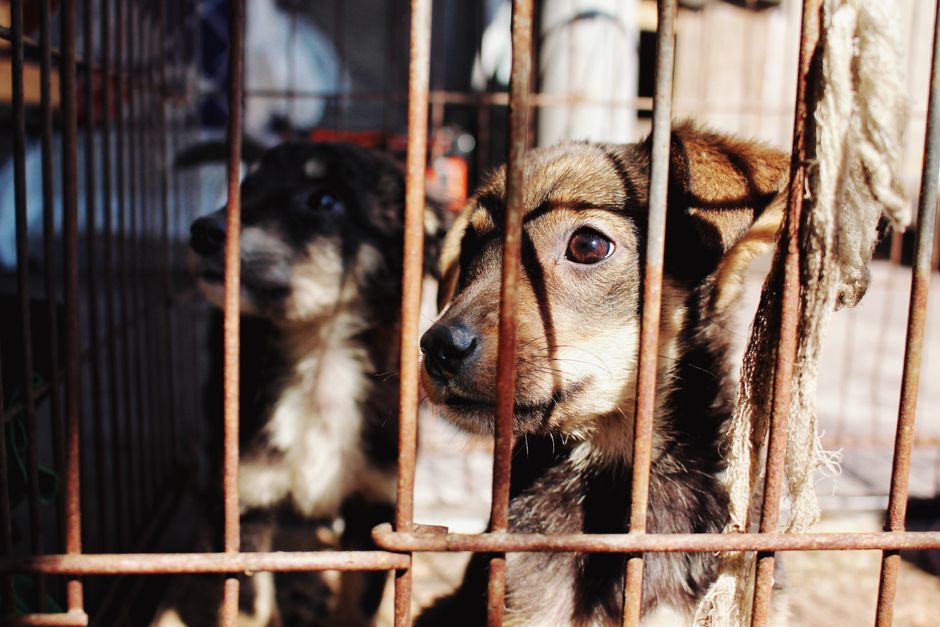
Help a rescue dog settle in by making the first week quiet, predictable, and small: provide one safe area, keep meals and walks on a reliable schedule, limit visitors and dog introductions, and arrange a veterinary check within a week. Do not force affection or social contact. Hiding, barking, accidents, and reduced appetite can reflect adjustment, but aggression, illness, or distress when alone need prompt professional attention.
The apparent paradox of adoption is that the home you prepared can still be overwhelming. New sounds, smells, people, rooms, and resident animals arrive all at once. The useful goal is not to make the dog happy on day one. It is to make the environment legible: the same basic sequence, the same boundaries, and fewer surprises.
How long does it take a rescue dog to adjust to a new home?
A rescue dog may begin relaxing within days, but adjustment can take months or longer; the first week is the opening phase, not the verdict on the adoption. The ASPCA describes a practical 3-3-3 framework: the first 3 days of decompression, the next 3 weeks of building routine and basic training, and the first 3 months of deeper adjustment. Its central caution is simple: some pets settle quickly, while others need more time.
This framework is useful because it prevents a common mistake: interpreting early behavior as a fixed personality. The Humane Society of the United States likewise says adjustment can take days, months, or longer, especially after multiple homes or shelter stays. A 2022 Animals study of 132 shelter-dog adopters found that two-thirds reported post-adoption behavior problems, while training difficulty and nonsocial fear decreased over time. Early difficulty is information, not a final diagnosis.
| Period | Primary objective | What to prioritize |
|---|---|---|
| First 72 hours | Decompression | Quiet observation, one safe area, routine meals and bathroom trips, no forced interactions |
| First week | Safety and predictability | Veterinary check, controlled access to rooms, calm household rhythm, short familiar walks |
| Next 3 weeks | Confidence through repetition | Positive-reinforcement training, bonding, and gradual expansion of routines |
| First 3 months | Longer-term adjustment | Evaluate patterns over time rather than judging the dog by the first few days |
Set up the safe area before the dog explores the rest of the home. The ASPCA recommends a dedicated quiet space, secured cords, windows and doors, removal of chewable hazards, and gates to limit access. VCA Animal Hospitals similarly recommends allowing exploration one room at a time and closing rooms that are not ready. This is not restrictive housekeeping; it removes decisions the dog is not prepared to make.
Make the daily sequence boring in the best sense: food, outdoor break, rest, another outdoor break, and sleep occurring in a repeatable pattern. The Humane Society recommends feeding, walking, and leaving for work at the same times each day in the early weeks. If the household itself is tense or irregular, use the same principles that make a daily routine helpful for everyday anxiety: reduce avoidable uncertainty and make the next event easier to predict.
Should I introduce my rescue dog to visitors and other dogs right away?
No: keep the first week or more quiet and consistent, and do not introduce visitors or other dogs simply because the dog has arrived. The ASPCA advises against forced interactions during the first 3 days, while the Humane Society specifically advises skipping busy parks, dog parks, and stores during the first week or more. Novelty is not a socialization program when a dog is still learning where the water bowl is.
For resident pets, use gates and separation to control access, then let the dog observe the household at a manageable distance. The immediate task is safe coexistence, not friendship. For children, VCA Animal Hospitals advises giving the dog an undisturbed resting place and establishing rules against reaching for the dog while resting or while the dog has a valued item such as food.
Visitors can wait. When the household does begin adding activity, add one variable at a time: a familiar visitor, a calm outing, or a brief exposure to another dog. If the dog becomes more withdrawn, vocal, or difficult to settle afterward, the pace exceeded the dog’s current capacity. Return to the quieter routine rather than escalating the exposure.
Leaving the dog alone also deserves a conservative plan. VCA advises avoiding solo time in the new home for at least 1 to 2 weeks when possible. Once departures are necessary, begin when the dog normally rests and build duration gradually. The ASPCA’s separation-anxiety guidance is more precise: begin graduated absences at 1 to 2 seconds, and lengthen them only while the dog remains comfortable. The governing rule is not calendar time; it is staying shorter than the time required for distress to begin.
Why is my newly adopted dog hiding, barking, or not eating?
Hiding, barking, reduced appetite, house-training mistakes, and unsettled behavior can occur because a newly adopted dog is overwhelmed by transition, but these signs should be monitored rather than dismissed. The ASPCA notes that new sounds, smells, people, and resident pets can make the first 3 days particularly nerve-racking. The Journal of the American Veterinary Medical Association found that house training was the most commonly reported behavior problem for dogs one week after shelter adoption.
There is a separate medical reason not to explain everything as nerves. In the same Journal of the American Veterinary Medical Association study, 51.9% of 2,624 dogs and cats with reported data had a health problem one week after adoption, and respiratory tract disease was the most commonly reported problem. The Humane Society recommends a general veterinary health check within one week, including review of vaccinations and flea and tick prevention. Schedule it even if the dog seems well; bring notes on appetite, elimination, sleep, coughing, and behavior.
Some signs require a faster response. House soiling during absences, for example, should be evaluated by a veterinarian before behavior modification because urinary tract infection, diabetes, kidney disease, and bladder stones can contribute, according to the ASPCA. Persistent barking or howling, chewing, digging, escape attempts, and pacing only when the guardian leaves fit the pattern of possible separation anxiety. Escape behavior can also cause broken teeth, scraped paws, and damaged nails.
Aggression changes the threshold. The American College of Veterinary Behaviorists recommends professional help for any animal displaying aggressive behavior because the safety and liability consequences are serious. A board-certified veterinary behaviorist is a licensed veterinarian with advanced behavior-specific training who can assess medical contributors and, when indicated, prescribe medication alongside behavior modification. A credentialed trainer can help with training mechanics, but aggression, severe fear, and separation distress merit veterinary involvement rather than improvised exposure.
The first week succeeds when it produces usable evidence: what helps the dog rest, what triggers distress, and which routines are sustainable for the household. That is enough. Expand the dog’s world after the dog can reliably recover within the small one.
Frequently Asked Questions
What routine should I use during the first week with a rescue dog?
Keep feeding, walks, bathroom trips, and household departures as consistent as possible. The Humane Society recommends taking a newly adopted dog outside every few hours at first, because a previously house-trained dog can still have indoor accidents while adapting to a new setting and schedule. Keep the dog’s accessible space small and calm, then expand it gradually as the dog settles.
When can I start training a rescue dog after adoption?
The ASPCA places basic training and positive reinforcement in the next-three-weeks phase of its 3-3-3 adjustment framework. During the first three days, prioritize observation, routine, and voluntary interaction rather than asking for a large training agenda. Training should build predictability, not add pressure.
How can I leave a rescue dog alone without making anxiety worse?
Avoid leaving a dog alone in the new home for one to two weeks when possible, as VCA Animal Hospitals advises. When departures begin, the ASPCA recommends starting with one- to two-second absences and increasing duration only while the dog remains below its upset threshold. Persistent barking, escape attempts, pacing, destructive behavior, or house soiling during absences warrant veterinary assessment and behavior guidance.
Sources
- American Society for the Prevention of Cruelty to Animals: Adoption Tips
- Humane Society of the United States: How to Make Your New Dog Feel Comfortable
- Journal of the American Veterinary Medical Association: Health and Behavior Problems After Shelter Adoption
- American Society for the Prevention of Cruelty to Animals: Separation Anxiety
- VCA Animal Hospitals: Moving With Your Dog
- American College of Veterinary Behaviorists: Animal Owners
- Animals: Post-Adoption Behavior in Shelter Dogs