
How Should I Choose and Portion Food for a Healthy Indoor Adult Cat?
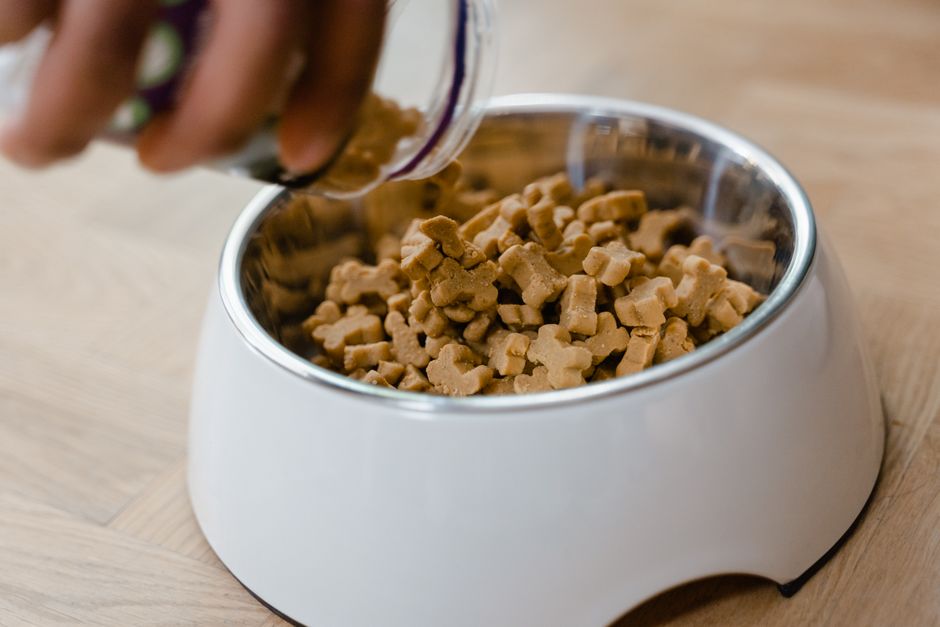
Choose a complete-and-balanced food formulated for adult maintenance, then portion it by calories rather than trusting an “indoor” label or a package scoop. Wet, dry, or mixed feeding can work; the decisive variables are calorie density, measured meals, treats, body condition, and weight trends. Start with veterinary guidance, then adjust deliberately every two weeks.
Do indoor cats need food labeled specifically for indoor cats?
No: an indoor cat does not inherently require a food marketed as an indoor formula. Cornell Feline Health Center makes the more useful distinction: select a diet that is complete and balanced, then choose a format and quantity that suit the individual cat.
The label has one job that deserves more attention than the front-panel marketing: the nutritional-adequacy statement. In the United States, the FDA explains that a food described as complete and balanced is intended to serve as the sole diet, and its adequacy statement should identify the applicable life stage. For a healthy adult, that means adult maintenance, not growth/reproduction.
This resolves a common category error. “Indoor” describes a living arrangement; “adult maintenance” describes a nutritional purpose. Size, neuter status, health status, activity, and body condition belong in the feeding decision. An ingredient list cannot settle that decision either: the World Small Animal Veterinary Association (WSAVA) notes that ingredient names do not establish nutritional quality, digestibility, or nutrient availability. Nor do endorsement seals guarantee nutritional adequacy, a point the FDA makes directly.
Read the label in the same disciplined way you would read any household nutrition label: identify what the statement actually establishes, then ignore claims it does not establish. The method is similar to the one used when learning how to grocery shop and read labels to lower sodium: the relevant evidence beats the attractive package language.
Is wet food or dry food better for an indoor cat?
Neither format is automatically better; a complete-and-balanced wet, dry, or mixed plan can meet an indoor cat's needs when its calories are controlled. The meaningful trade-off is water and calorie delivery, not a simplistic contest between cans and kibble.
Water is the clearest difference. Cornell reports that dry food contains about 6% to 10% water, while canned food contains at least 75% water; a separate Cornell feeding guide places typical wet food at roughly 70% to 80% water. Thus wet food can be a substantial dietary water source. Cats eating only dry food should always have ample fresh water, particularly when they are prone to lower urinary tract disease.
Dry food can still be a rational choice, especially when a cat accepts it and the household can measure it consistently. The failure mode is not the kibble bowl itself; it is the unmeasured bowl. Cornell warns that free-feeding dry food can lead some cats to overeat and gain inappropriate weight. A cross-sectional study of adult cats, published in BMC Veterinary Research, found that predominantly dry-food feeding and inactivity were associated with increased overweight risk in its owner-questionnaire cohort. Association is not causation, and the authors identify selection and information bias. Still, the operational lesson is plain: sedentary cats need measured intake, whatever the format.
Mixed feeding is therefore a practical compromise when it lets you count the calories from both foods. Do not compare canned and dry foods by the crude-protein percentages in guaranteed analysis alone. The FDA explains that those values are reported as fed, while nutrient-profile values use dry matter; moisture makes a direct label-percentage comparison misleading.
How many calories should a sedentary indoor cat eat each day?
A sedentary indoor cat should begin with an individualized calorie target, not a universal cup measurement. WSAVA estimates about 225 to 250 kcal per day for a healthy 4 kg (8.8 lb) adult, 240 to 270 kcal for a 4.5 kg (9.9 lb) cat, and 250 to 290 kcal for a 5 kg (11 lb) cat; these are starting estimates, not prescriptions.
WSAVA's calculations use 100 kcal times body weight in kilograms for a lean adult and 130 kcal times body weight in kilograms raised to the 0.4 power for an adult prone to obesity. The arithmetic provides a starting hypothesis. The cat's trim body condition tests it. As WSAVA puts it, “Cats are individuals and some may have higher or lower requirements in order to maintain an ideal, trim body condition.”
| Healthy adult body weight | WSAVA estimated daily calories | What the estimate means |
|---|---|---|
| 4 kg (8.8 lb) | 225-250 kcal | A starting range for a healthy adult |
| 4.5 kg (9.9 lb) | 240-270 kcal | A starting range for a healthy adult |
| 5 kg (11 lb) | 250-290 kcal | A starting range for a healthy adult |
Convert the daily target into actual food using the calories listed for the exact can, pouch, or measured dry-food serving. Subtract treats from the same daily budget: Cornell advises that treats generally account for no more than 10% to 15% of daily calories. Then divide the remaining food into measured meals rather than leaving an open-ended supply available for grazing.
Package directions are estimates for an average cat, and WSAVA says individual needs can vary by up to 50% above or below them. Reassess the offered amount every two weeks at first, using weight and body condition with veterinarian guidance. This is the control loop: choose an evidence-based starting portion, observe the individual animal, and change one variable deliberately. A food name cannot do that work.
Frequently Asked Questions
Will indoor-cat food prevent hairballs or weight gain?
No. Cornell states that an indoor cat does not inherently need a product marketed as an indoor formula. Weight gain is governed by the relationship between calories offered and calories used, so measured portions and follow-up adjustments matter more than the product name; the provided sources do not establish that an indoor label prevents hairballs.
How do I switch my cat to a new food without causing stomach upset?
For a healthy cat, WSAVA recommends a transition lasting at least three days: 75% old food and 25% new on day 1, half-and-half on day 2, and 25% old with 75% new on day 3, followed by the new food on day 4. Offer the new food in a separate bowl rather than mixing it with the old food, because sudden changes can cause vomiting and diarrhea.
What should I look for on an indoor cat food label?
Look first for a nutritional-adequacy statement showing the food is complete and balanced for adult maintenance. Then check calories per serving and feeding directions, but treat both as starting points; ingredient names, promotional seals, and as-fed guaranteed-analysis percentages do not by themselves establish nutritional quality or allow a fair wet-versus-dry comparison.
Sources
- World Small Animal Veterinary Association: Calorie Needs for Healthy Adult Cats
- WSAVA Global Nutrition Committee: Frequently Asked Questions and Myths
- U.S. Food and Drug Administration: Complete and Balanced Pet Food
- Cornell Feline Health Center: Feeding Your Cat
- Cornell Feline Health Center: How Often Should You Feed Your Cat?
- BMC Veterinary Research: Overweight in Adult Cats