
Best Home Air Purifier for Dust: Choose the Right Fit
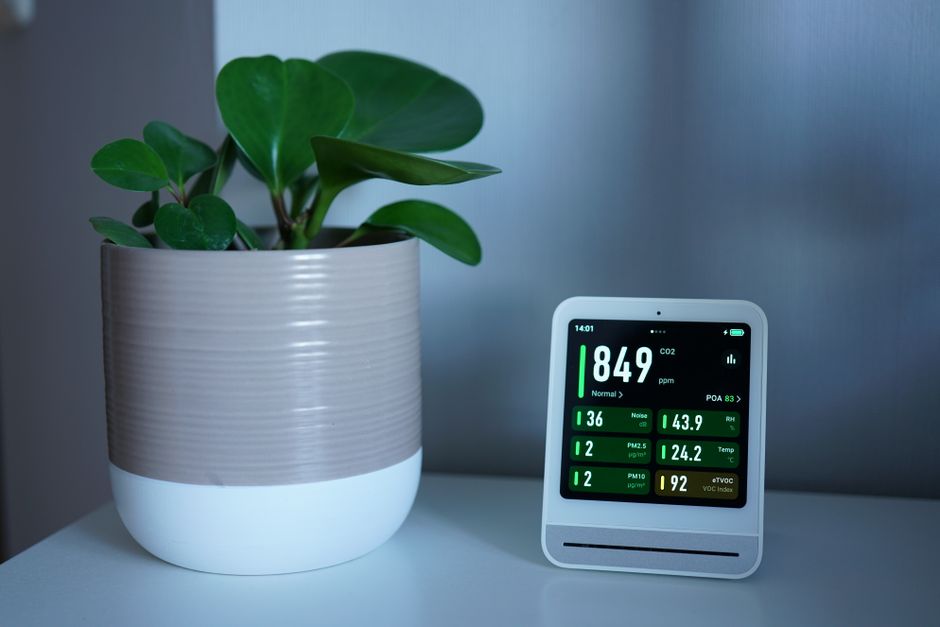
The best home air purifier for dust is a room-sized unit with an independently verified dust CADR that matches the room, a true HEPA filter, and airflow you can run comfortably. Check the dust CADR rather than relying on a broad room-size claim, and choose extra capacity if you want to use a quieter speed. It can reduce airborne particles, but it will not remove dust already settled on surfaces.
Which air purifier is best for dust in my home?
The best purifier for your home is the one with a verified dust CADR suited to the area you want to clean, plus a filter and operating speed you can maintain. AHAM Verifide’s searchable directory lists room cleaners with CADR performance independently verified by third-party laboratory testing, and lets you search by CADR, suggested room size, manufacturer, and brand.
Check the dust CADR specifically. AHAM labels show separate ratings for dust, pollen, and tobacco smoke; a high score in one category is not a substitute for checking the dust rating. The directory can help you compare candidates, but the rating still needs to fit the room.
For filtration, EPA defines HEPA as a pleated mechanical filter that can theoretically remove at least 99.97% of airborne particles at 0.3 microns, including dust, pollen, and mold. EPA notes that 0.3 microns is the most penetrating particle size; particles larger or smaller are captured at higher efficiency. Verify the product’s filter description rather than assuming any filter labeled “HEPA-type” meets that definition.
Use this comparison to narrow the choice. The listed figures are sizing guidance, not model-specific product prices or noise ratings.
| Option | Who it suits | Cost | Key limitation |
|---|---|---|---|
| Room cleaner with verified dust CADR sized to the room | People comparing individual units for a room or area | not published | Specific model performance and noise vary; compare the certified dust score and product details |
| Capacity sized around 65 cfm CADR for 100 sq. ft. | Rooms around 100 sq. ft. with an 8-foot ceiling | not published | Higher ceilings call for higher CADR |
| Capacity sized around 130 cfm CADR for 200 sq. ft. | Rooms around 200 sq. ft. with an 8-foot ceiling | not published | Higher ceilings call for higher CADR |
| Capacity sized around 195 cfm CADR for 300 sq. ft. | Rooms around 300 sq. ft. with an 8-foot ceiling | not published | Higher ceilings call for higher CADR |
These EPA estimates provide a practical starting point for dust CADR sizing. ENERGY STAR also lists 65 cfm for 100 square feet and 130 cfm for 200 square feet, while its table lists 325 cfm for 500 square feet. Differences among sizing rules and room conditions mean a broad “covers up to” label should not replace checking the actual CADR and ceiling height.
What CADR do I need for dust in my room?
Choose a dust CADR that meets the room’s air-cleaning need, then adjust upward for higher ceilings or quieter everyday operation. For an 8-foot ceiling, EPA’s sizing estimates call for at least 65 cfm for 100 square feet, 130 cfm for 200 square feet, and 195 cfm for 300 square feet.
AHAM’s 2/3 rule is expressed using smoke CADR: at least two-thirds of the room area in square feet. For example, AHAM says a 120-square-foot room calls for at least 80 smoke CADR. That is a separate category from dust CADR, so use the rule as a sizing cross-check, not as a dust score. Allow for ceilings above 8 feet.
CADR is typically measured at the highest fan speed, according to ENERGY STAR. A unit with more capacity than the minimum may give you room to use a lower speed for everyday operation. That trade-off matters in a bedroom: the available sources do not publish noise levels for individual models, so compare the product’s speed-specific noise information before buying. EPA notes that about 50 dB is roughly the operating noise of a modern refrigerator.
For an open-plan space, calculate the area the purifier is meant to serve rather than sizing for just the sofa corner. EPA advises considering multiple cleaners if the space exceeds available units’ capacity. Portable units are designed for a single room or area, so placing a unit in one room does not establish that it will serve the whole home.
Will an air purifier reduce the visible dust settling on furniture?
An air purifier can filter airborne dust, but it will not lift dust already settled on furniture, floors, or other surfaces. EPA explains that larger particles, including house-dust allergens, are often found settled on home surfaces; a cleaner cannot remove them unless they are disturbed and resuspended in the air.
Set the target accordingly: filtration is for particles moving through the air, while visible surface dust still needs ordinary cleaning. ENERGY STAR likewise notes that some large allergens settle before they reach the cleaner and identifies vacuuming, mopping, and dusting as complementary measures. A purifier can be part of a dust-control routine, not a replacement for it.
Placement and run time affect how much air the unit processes. EPA recommends putting a portable cleaner where people spend the most time and keeping airflow unobstructed. Its guidance is direct: “The longer the air cleaner runs, the more air it filters.” Higher fan speeds also filter more air, so balance speed against the noise acceptable in that space.
Should I choose a true HEPA filter or is a HEPA-type filter enough for dust?
Choose a true HEPA filter when you want the EPA-defined HEPA performance for airborne particles; the cited sources do not establish that “HEPA-type” filters meet the same threshold. EPA’s definition is theoretical removal of at least 99.97% of airborne particles at 0.3 microns, including dust, with higher capture efficiency for particles above or below that most-penetrating size.
Do not confuse a MERV rating with a HEPA rating. EPA explains that MERV compares how HVAC filters capture particles from 0.3 to 10 microns; it is not the HEPA rating system. When comparing a portable room cleaner, check its filter specification and the independently verified CADR separately: filtration type and delivery rate answer different questions.
Filter upkeep is part of the performance decision. EPA says dirty or overloaded filters work poorly and should be checked and replaced according to manufacturer guidance. ENERGY STAR similarly advises following the product manual’s replacement schedule. Before purchase, check the replacement-filter instructions and availability in the product information; the provided sources do not give a universal replacement interval or price.
Frequently Asked Questions
How often should I clean the pre-filter and replace the HEPA filter in a dusty home?
There is no single interval in the cited guidance: inspect filters and follow the product manual’s cleaning and replacement instructions. Dirty or overloaded filters work poorly, so a dusty home should make regular checks part of upkeep.
Should I run an air purifier continuously or only while cleaning?
Longer run time filters more air, and EPA says higher fan speeds also filter more air. Running it only while cleaning limits filtration to that period; choose a speed and run time that fit the room and noise you can tolerate.
Will one air purifier work for an open-plan living area, or do I need one per room?
Base the choice on the area the unit will serve and its CADR, accounting for ceilings higher than 8 feet. EPA recommends considering multiple units when the open-plan space exceeds the capacity of available cleaners; a portable unit is designed for a single room or area.
Sources
- U.S. Environmental Protection Agency — Guide to Air Cleaners in the Home
- U.S. Environmental Protection Agency — What is a HEPA filter?
- AHAM Verifide — Find a Certified Room Air Cleaner
- U.S. Environmental Protection Agency — Will air cleaners reduce health risks?
- ENERGY STAR — How to Choose a Room Air Cleaner
Read next

How Do I Choose a Metal Carport Kit and Anchoring Setup?
Choose a metal carport kit by matching local permit, wind, snow, soil, surface, and engineered anchoring requirements.

How Do I Choose a Good Golf Instructor Near Me?
Choose a local golf instructor with a trial lesson, clear goals, purposeful practice, and a measurable plan for progress.

Should I Choose Senior or Regular Flex Golf Shafts?
Choose golf shaft flex, weight, material, and loft using launch data and performance rather than an age label.
Which Metal Carport Roof Style Sheds Snow, Rain, and Debris Best?
Choose a metal carport roof by local snow, rain, wind, drainage, and fastening requirements, not appearance alone.